
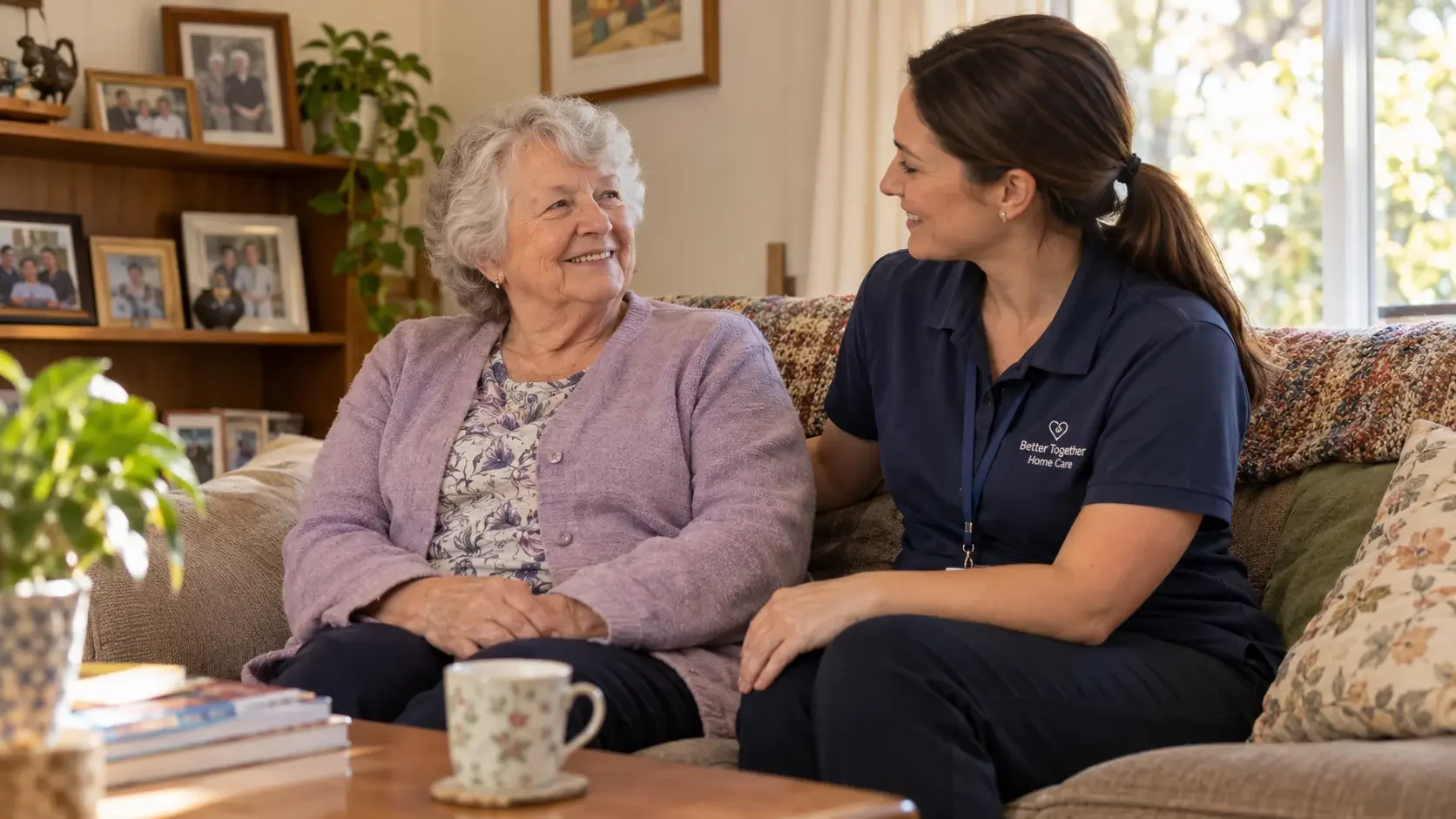
Most families come to the idea of home care slowly. Something changes. A fall, a hospital stay, a slow decline that has been easy to ignore until it isn't anymore. Then comes the question: what do we actually do now?
For many Melbourne families, the answer is private home care. Not a nursing home. Not a waiting list. Care that comes to your parent, in the home they know, on a schedule that suits them. The benefits of home care for elderly Australians go beyond the practical. They touch on dignity, independence, and the kind of daily life most older people actually want.
This article walks through what those benefits look like in practice, so you can make a clearer decision for your family.
No Waitlist: Care Can Start Within Days
One of the most overlooked benefits of private home care is simply how quickly it can begin.
With private home care, there is no means test, no government assessment, and no months-long queue. You contact a provider, discuss your parent's needs, and care can typically start within a few days. That speed matters enormously when a situation changes suddenly.
If your parent has just come home from hospital, or you have noticed a sharp decline over the past few weeks, waiting is not always an option. Private home care removes that barrier completely.
If you are already seeing signs that your parent needs help at home, acting quickly can make a real difference to how well they recover and how confident they feel about staying at home.
Your Parent Stays in the Home They Know
There is something that does not show up in any brochure: the profound sense of calm that comes from being in a familiar place.
For older Australians, home is where their life is stored. The chair by the window, the garden, the morning routine that has not changed in thirty years. These things are not trivial. They are anchoring. And for people living with dementia or early cognitive change, familiar surroundings can reduce confusion, anxiety, and distress in ways that no amount of clinical care can replicate.
According to the Australian Institute of Health and Welfare, the number of older Australians receiving care at home more than tripled between 2017 and 2022. That shift reflects a growing recognition that home is not just a preference. For most people, it is genuinely better.
Staying at home also means your parent keeps access to the things that make life worth living: their pets, their neighbours, their own fridge, their own bed.
One Carer, One Focus: Undivided Attention for Your Parent
Walk through most residential aged care facilities and you will see staff managing many residents at once. That is not a criticism of those staff. It is simply the reality of how group care works.
Private home care works differently. When a carer arrives at your parent's home, their entire focus is on your parent. Only your parent. No interruptions, no competing demands, no split attention.
That one-on-one relationship also builds over time. When the same carer visits regularly, they get to know your parent's preferences, their moods, their routines. They notice when something feels off before it becomes a crisis. That kind of attentiveness is genuinely hard to replicate in any other care setting.
Our personal care services in Melbourne are structured around exactly this kind of consistent, individual support.
Support for Physical Health and Recovery at Home
Home care is not just about helping with daily tasks. It can also provide meaningful clinical support, which is something many families do not realise until they need it.
After a hospital stay, recovery at home is often both possible and preferable. A qualified carer can help with mobility, monitor how your parent is managing, and flag any concerns to the family or their GP early. For more complex needs, an in-home nurse can provide wound care, manage medications, assist with catheters or stomas, and coordinate with other health professionals.
The difference between recovering at home versus in a facility is significant for most people. The familiar environment, the absence of institutional noise and routine, and the presence of family nearby all contribute to better outcomes.
Our in-home nursing care in Melbourne covers a full range of clinical needs, from post-operative support through to ongoing chronic condition management.
Your Parent Keeps Control of Their Own Life
One of the hardest parts of ageing is the gradual loss of control. Things that were automatic, like driving, cooking, or managing medications, become difficult. And with that loss of function often comes a loss of say over daily life.
Private home care is designed to work around your parent's life, not the other way around. They wake up when they want to. They eat what they like. They decide who visits and when. The carer supports what your parent cannot manage alone, without taking over the things they still can.
This distinction matters more than it might seem. Older people who feel they have retained some control over their daily routine report significantly better mood and outlook than those who feel their choices have been taken away. Keeping that sense of agency is one of the most important things home care can preserve.
Connection to Family, Friends, and the Broader Community
Loneliness is one of the most serious health risks facing older Australians, and it is one that rarely gets enough attention.
Research consistently links social isolation in older adults to faster cognitive decline, poorer physical health, and reduced quality of life. A regular carer is not just practical support. They are also a source of genuine human connection, conversation, and company on days when your parent might otherwise see no one.
Beyond the home, staying connected to the community matters too. Our companion care in Melbourne supports your parent in staying social, whether that is attending a community group, meeting friends for coffee, or simply getting out of the house for a walk.
For parents who can no longer drive, transport assistance ensures they can still get to medical appointments, the shops, and the people they care about. That continuity of connection keeps life feeling purposeful.
Peace of Mind for the Whole Family
When you are the adult child of an ageing parent, there is a particular kind of low-level worry that never fully goes away. You are thinking about them when you are at work. You are wondering whether they remembered to take their medication. You are second-guessing whether last week's visit was enough.
Private home care does not eliminate that concern, but it does change its nature. Knowing that a qualified, consistent carer is visiting your parent regularly, keeping an eye on how they are managing, and in contact with your family if anything changes, is a different experience from carrying that responsibility entirely yourself.
It also allows you to step back into being a family member rather than a full-time carer. That shift is important for your relationship with your parent and for your own wellbeing.
If you are at the stage of needing to have this conversation with your parent, our article on how to talk to your elderly parent about home care walks through how to approach it with care.
When Does Home Care Actually Make Sense?
Home care is not just for people who are seriously unwell or approaching end of life. Many families start much earlier than they realise they should.
If your parent is managing most things independently but struggling with a few specific tasks, that is already a reasonable time to consider some support. Starting early means your parent has time to get comfortable with having a carer around before their needs increase. It is far easier to build trust gradually than to bring in full-time support during a crisis.
The question of timing matters. Our article on when it is time to get home care for a parent covers the signs that indicate a move from watching and waiting to actively arranging support.
Frequently Asked Questions
What are the main benefits of private home care for elderly Australians?
Private home care allows your parent to stay in their own home with personalised, one-on-one support from a consistent carer. The key benefits include maintaining independence, staying in a familiar environment, receiving care on a flexible schedule, and avoiding the upheaval of moving to a residential facility. For private home care specifically, there is no waitlist and care can begin within days.
How quickly can home care start in Melbourne?
Private home care in Melbourne can typically begin within a few days of your first enquiry. There is no government assessment, no means test, and no application process involved. This makes private care particularly useful after a hospital discharge, a sudden health change, or when a family simply cannot wait months for other options to become available.
Is home care suitable for someone living with dementia?
Yes, and for many people with dementia, home care is especially beneficial. Familiar surroundings, consistent routines, and a regular carer all help reduce the confusion and distress that can come with cognitive change. Moving to an unfamiliar environment often accelerates disorientation, whereas staying at home with the right support can significantly slow that process.
Can home care prevent a move to a nursing home?
For many older Australians, yes. Home care allows needs to be met incrementally, starting with a few hours of support per week and increasing as required. Families who start early and build the right care plan often find their parent can remain at home for much longer than they expected, sometimes indefinitely. The key is not waiting until a crisis forces the decision.
What is the difference between private home care and a Home Care Package?
Private home care is paid for directly by the family, without any government involvement, assessment, or waiting list. Care can begin almost immediately and is fully controlled by the family in terms of provider, schedule, and services. A Home Care Package is a government-subsidised program that requires an assessment through My Aged Care and can involve a significant wait. Foundara Care operates as a private-pay provider only, which means families get faster access and greater flexibility over how care is arranged.
Getting Care Right for Your Parent
Arranging home care for a parent is one of the more significant decisions a family makes. It takes courage to ask for help, and it takes time to find the right fit.
The benefits of home care for elderly Australians are real and practical. Staying in a familiar home, receiving one-on-one attention, maintaining independence, getting clinical support when needed, and staying connected to the people and places they love. These things do not just make life easier. They make it better.
If you would like to talk through what home care could look like for your parent, the team at Foundara Care is available to have that conversation. No pressure, no jargon. Just honest answers about what is possible.
