
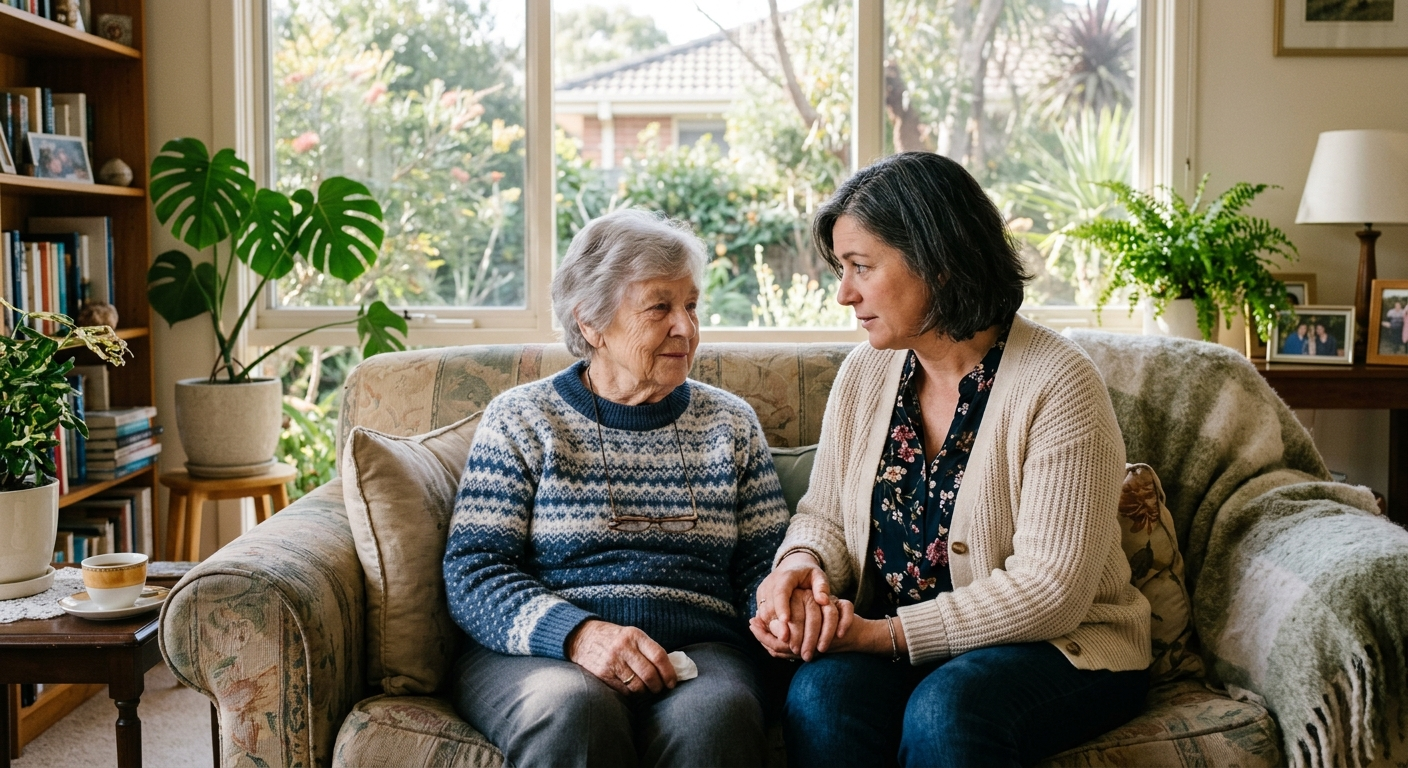
Something felt off last time you visited. Maybe the fridge was emptier than usual. The garden had gone a bit wild. Your parent repeated a story from ten minutes earlier, or seemed quieter than you remember. These moments stick with you, but they are hard to pin down. Is it just ageing, or is it a sign your elderly parent needs help at home?
TheAustralian Bureau of Statistics found that nearly 40 percent of Australians aged 65 and over require assistance with at least one daily activity. So if you are picking up on changes, you are not imagining it, and plenty of families are in the same position.Foundara Care supports older people across Melbourne to live safely at home, and this guide covers what to look for, how to separate typical ageing from genuine concern, and what practical steps you can take without a long wait.
How to Tell Normal Ageing from a Real Warning Sign
Some changes come with getting older. Knowing which ones matter saves you from unnecessary worry and helps you act when it counts.
What Normal Ageing Looks Like
A bit more stiffness in the morning. Reaching for reading glasses more often. Blanking on a name and then recalling it a few minutes later. Bouncing back from a cold more slowly than they used to. None of this on its own points to a problem. It is just what life looks like past 70.
When the Pattern Shifts to Concern
Pay attention when things start clustering. A forgotten GP appointment on its own is nothing. But missed tablets, an overdue power bill, and a stumble on the back step all within the same two weeks? That is a pattern worth taking seriously.
Ask yourself: is this new behaviour? Is it getting worse rather than staying steady? Are multiple small things happening at once? If you are answering yes to two or three of those, listen to your instinct. Families are nearly always the first to pick up that something has shifted, sometimes before the person themselves realises it.
The Obvious Signs Most Families Recognise
Once you start looking, these are hard to unsee. Any one of them on its own deserves attention. Several together are a clear signal.
Falls, Unsteadiness and Mobility Problems
For many families, this is the moment things become urgent. Bruises that do not have a clear explanation. Gripping walls or furniture to cross a room. Steering clear of the staircase. A visible hesitation before standing up from a chair.
A fall might sound minor, but for someone over 65 it rarely is. Data from theAustralian Institute of Health and Welfare shows that older Australians are hospitalised for falls at 12 times the rate of younger adults. One bad fall can mean a fracture, weeks in hospital, and a lasting loss of confidence that spirals into further decline.
Weight Loss and Changes in Eating
Their clothes sit differently. The fridge holds almost nothing, or the same unopened containers from your last visit. Meals get skipped because cooking has become exhausting, or getting to the supermarket feels like too much. When an older parent drops weight, it is almost never a diet choice. Something in their day-to-day has broken down.
Medication Problems
Tablets missed for days on end, or accidentally doubled up. A pill organiser untouched since Monday when it is already Thursday. Uncertainty about which pill does what. Medication mix-ups put older Australians in hospital more often than most people realise, yet catching them early is one of the simplest fixes there is.
Memory, Confusion and Poor Judgement
Losing their way on a road they have driven for decades. Asking the same question three times in one conversation. The stove left burning or the front door wide open overnight. Financial decisions that make no sense at all. Everyone forgets things now and then. But when confusion becomes frequent enough to create a safety risk, it is a different matter entirely.
Personal Hygiene Declining
The same outfit worn day after day. A noticeable change in body odour. Hair that clearly has not been brushed in a while. Showers skipped, not out of choice, but because the bathroom has started to feel dangerous. Grooming does not slip because someone stops caring. It slips because the physical act has quietly become too hard. Somepersonal care support in Melbourne restores both safety and routine to the morning.
Mood Changes and Social Withdrawal
Old friends no longer called. Lunch dates cancelled. The garden untouched. Weekend sport with the grandkids missed. Far too much sleep, or barely any. Snapping at people for no obvious reason, or becoming tearful out of nowhere.
Being isolated does real, measurable harm to older people. It drags down appetite, sleep quality, energy, and immune response. Having someone around regularly, even just for a cuppa or a trip to the shops, can reshape an entire week.Companion care in Melbourne is often the first thing families put in place when a parent starts pulling away.
The Subtle Signs Families Often Miss
The big warning signs get talked about. But a quieter set of changes tends to show up first, sometimes weeks or months before the obvious ones. These are the things families mention afterwards: "I wish I had connected the dots earlier."
The House Smells Different
You step through the door and the air feels stale or slightly sour. Rubbish bins have not gone out. The kitchen has a smell that was never there before. The bathroom is grimier than your parent would have ever accepted. A shift in how the home smells is one of the very first clues that daily habits are slipping.
The Fridge Tells a Story
Have a look next time you are there. Milk past its date. Last week's leftovers still sitting in a container. The same yoghurt you spotted on your previous visit. Or just empty shelves. What is inside that fridge will often tell you more about how your parent is coping than any conversation will.
The TV Is On All Day
Not tuned to anything in particular. Just running as background noise from morning until night. When someone who used to read, potter in the garden, or build things in the shed now sits in front of a screen all day, it usually signals low energy, loneliness, or both.
Excuses Not to Have Visitors
"The place is a bit untidy." "I am not up to it today." "Maybe next week." If your parent keeps finding reasons to put off visitors, there is often something behind it. They can see that things have slipped, they feel embarrassed about it, and they would rather cancel than let someone witness it.
Unexplained Bruises and Small Injuries
A dark mark on the forearm brushed off as bumping the door handle. A scraped shin they cannot remember getting. More often than not, these come from falls or stumbles they have kept to themselves. Plenty of older people stay quiet about a fall because they worry it will trigger a conversation about giving up their independence.
Unpaid Bills and Unopened Mail
Envelopes stacking up near the entrance. An overdue notice from the power company. A bank letter that has never been opened. Managing finances is one of the more mentally demanding everyday tasks, and when it starts to slide, it can point to cognitive changes, flagging motivation, or just the whole job becoming too much to handle.
What It Feels Like for You as the Adult Child
Almost every guide about ageing parents talks about the parent. Rarely does anyone address what you, the person searching for answers at midnight, are actually going through.
Noticing but Not Being Sure
Things catch your eye, but you cannot decide if they are serious enough to do anything about. Maybe you are reading too much into it. You reassure yourself it is fine, then stare at the ceiling at 2am running through everything again. That back-and-forth is exhausting. Here is a useful rule of thumb: if you have noticed enough to look it up online, it is worth paying attention to.
The Conversation You Keep Putting Off
You already know you should raise it. But they are proud. They will say they are managing. You do not want to hurt their feelings or come across as if you are taking charge. So another month passes without saying anything. Nearly every family goes through exactly this. The section below might make it a little easier.
How to Start the Conversation with Your Parent
There are a few things that help:
Pick a quiet moment when it is just the two of you. Not at a family dinner and not after a rough day.
Come from a place of concern, not authority. Something like "I want you to be comfortable and safe here at home" lands much better than "you are not coping."
Stick to one or two concrete things you have noticed. The fall a few weeks back. The tablets that got missed. Avoid rolling out a long list.
Give them options rather than instructions. Letting your parent have a say in the decision protects their dignity, and a yes becomes far more likely.
Position the help as something that keeps them in their home, not something that takes their home away.
One conversation might not be enough. That is completely normal. The aim the first time around is to open the door, not walk through it.
What to Do After You Notice the Signs
Seeing the changes is the difficult part. What comes next is more manageable than you might think.
Start with a GP Visit
Some of what you are observing may have a fixable cause. A urinary tract infection can mimic confusion. Side effects from medication can bring on dizziness or mood swings. Untreated hearing loss can look a lot like withdrawal. The GP can rule out the quick wins first. If getting to the clinic is part of the problem,aged care transport in Melbourne takes that off the table.
Write Down What You Are Seeing
Spend two or three weeks jotting down specifics. Concrete examples make the pattern clearer to you and are genuinely useful when speaking to a doctor or arranging support. "Mum had a fall on Tuesday and missed her tablets twice this week" carries more weight than "something seems wrong."
Arrange Support Before It Becomes Urgent
There is no need to wait until things reach crisis point. No referral required. No formal assessment to sit through. With a private pay provider, you describe what your parent needs and care can be in place within days. Most families start small, a couple of visits a week for help with showering, dressing, or moving around safely, and scale up if things change.
For a deeper look at timing, our guide onwhen to get home care for a parent covers the decision in detail. If you want to know what a support worker actually does on a visit,what personal care services include lays it out task by task.
Frequently Asked Questions
What are the first signs an elderly parent needs help at home?
The early ones tend to be quiet: grooming that has slipped, expired food in the fridge, mail stacking up unopened, a home that is less tidy than it used to be. More visible warning signs like falls, medication errors, and memory lapses usually follow. When several small changes show up around the same time, that pattern matters more than any single incident.
What if my parent refuses help?
It happens in most families. Keep the suggestion small at first. A couple of hours a week feels far less threatening than round-the-clock support. Talk about it as something that helps them stay in their own home rather than something being imposed on them. Letting your parent weigh in on who the worker is and when they visit goes a long way. You may need to have this conversation more than once.
How do I know if it is normal ageing or something more serious?
Ageing brings a gradual slowdown. Misplacing the car keys and finding them later is typical. Forgetting what car keys are for, or getting lost on a route they have taken for years, is not. Look for whether the behaviour is a departure from their usual pattern, and whether multiple smaller concerns are stacking up together.
Can I arrange in-home care without a referral in Melbourne?
Absolutely. Through a private pay provider, there is no referral, no formal assessment, and no queue. You make contact, explain what your parent needs, and care can usually begin within days. Support hours and types are adjusted over time as circumstances change.
How quickly can in-home care start?
With a private provider in Melbourne, it typically takes just a few days from your first call. There is no approval step and no waiting period. A lot of families start with a handful of visits per week and add more as needed.
Getting the Right Support in Place
These changes rarely announce themselves with a single dramatic event. They tend to build in the background: a fridge that has gone quiet, a garden growing rough, a parent who has stopped saying yes to visitors. By the time you feel certain something is wrong, it has usually been shifting for a while already.
If you are seeing changes in a parent in Melbourne and want to talk through what might help, the team atFoundara Care is there for that conversation. No waiting lists, no forms to fill in, no pressure. Just a straightforward chat about what would make a difference.
